Cats Lives Vertically
Cats aren’t tiny humans — we live horizontally, scanning a room at eye level, while cats explore across, up, and down. In a cozy 700-square-foot apartment, giving your cat more territory can feel impossible, but by using vertical space you can turn that compact space into a feline mansion.
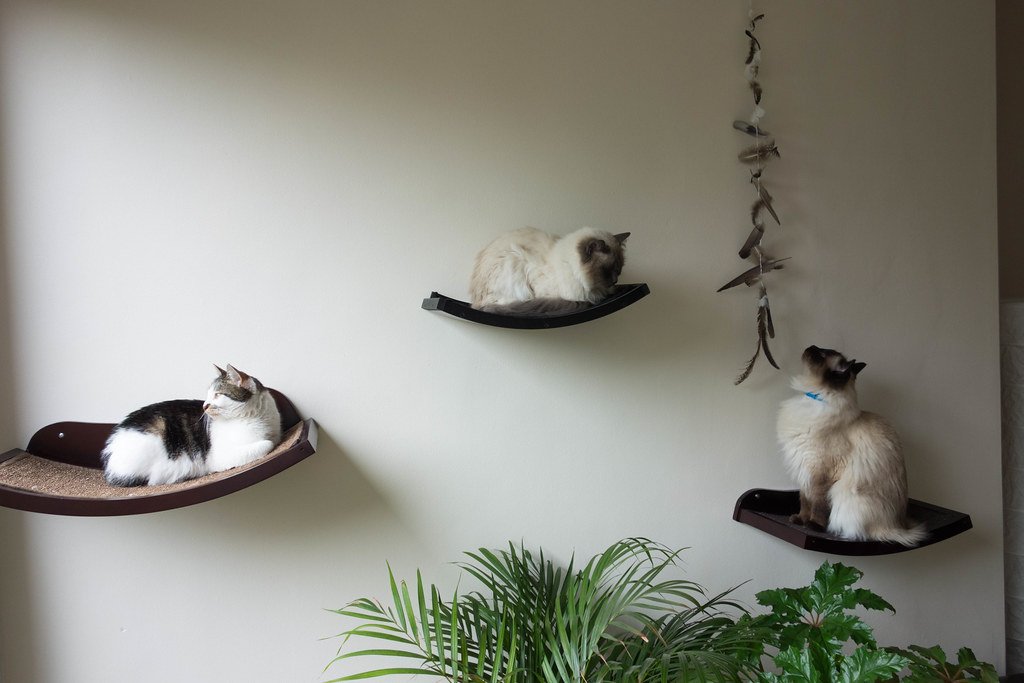
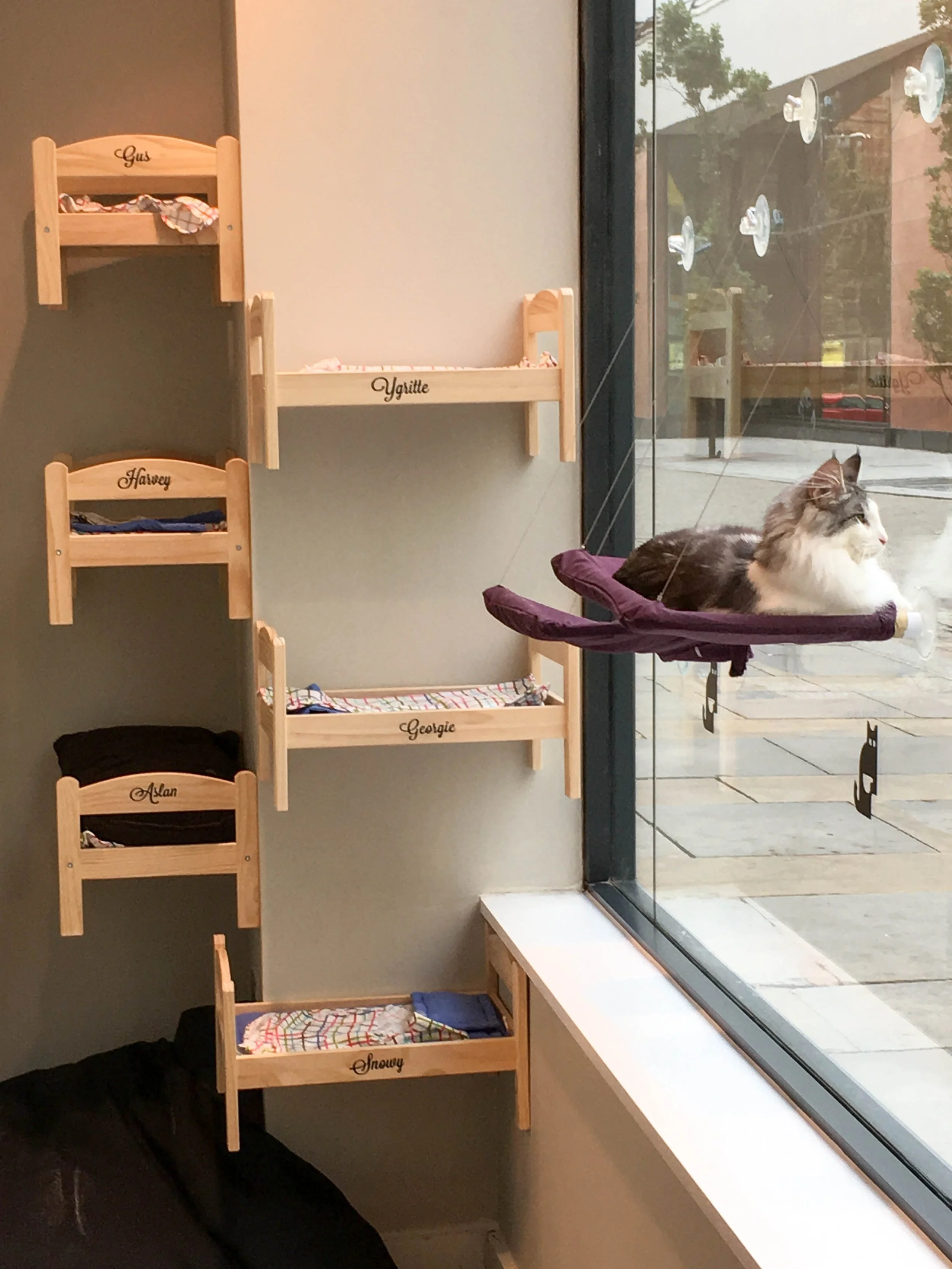
Do your cats squabble over cat trees, beds, or even your lap? Do they sometimes refuse to share a room?
Cats are built to think in three dimensions. In multi-cat homes, horizontal space is often the battleground: beds, favorite sunspots, and the best window-view real estate. But add height, and you give each cat a personal kingdom without forcing them into constant proximity. Vertical territory lets them spread out, observe from a safe distance, and claim their own lookout post all without a fur-flying showdown.
Why vertical spaces help
Safety and control: High spots let shy or anxious cats retreat and feel secure. A cat up high can watch the room and choose when to come down.
Reduced competition: With multiple levels, there’s less pressure on any single bed or perch, so dominant cats can’t monopolize everything.
Territory expansion without stress: Cats use vertical space to mark territory in a non-confrontational way — scent, sightlines, and body language all work more peacefully when they’re not forced to be face-to-face.
Environmental enrichment: Climbing and perching provide mental and physical stimulation, which helps reduce boredom-driven aggression.
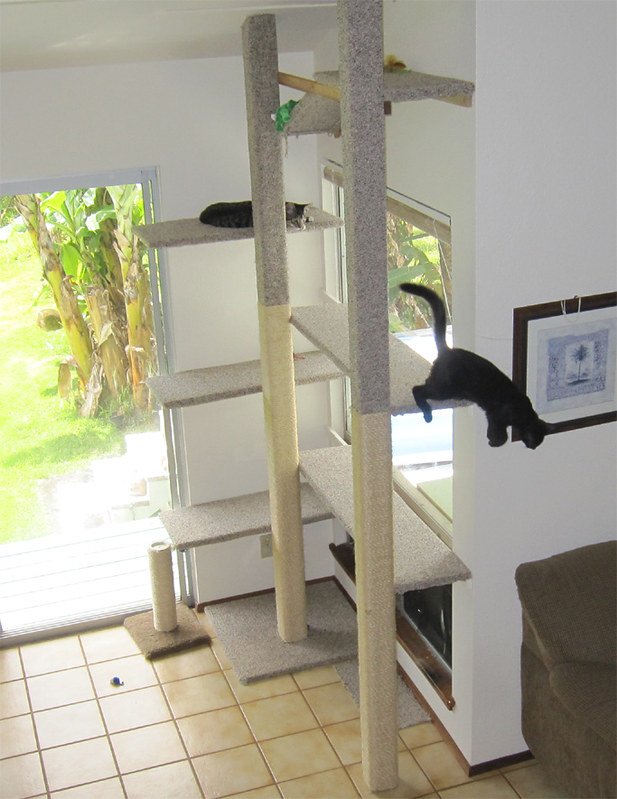
Placement tips
Spread vertical resources across the home rather than clustering them in one room.
Place perches near windows, feeding stations, and favorite human hangouts so cats can choose their vantage points.
Ensure tall pieces are sturdy and anchored, safety first for curious climbers
Giving your feline friends vertical territory can reduce territorial behavior.
How to create a vertical playground
Wall shelves and steps: Install staggered shelves or step-style ledges so cats can climb from one level to another. Place them near windows if possible.
Cat trees and tall towers: Offer multiple perches at different heights and widths. Include cozy enclosed boxes for nappers and high open platforms for sentries.
Window perches: A sun-facing ledge or window hammock is prime real estate, add more than one if you have multiple cats.
Door-top or bookshelf perches: Utilize existing tall furniture by giving cats safe, stable spots on top of bookcases or tall entertainment centers.
Multiple options per room: Aim for at least as many resting/perching spots as you have cats, plus one extra, so nobody is forced to share.
Visual barriers and escape routes: Include semi-enclosed spaces and clear paths between levels so cats can move without confronting each other.