Rabies Isn’t Gone: Why Vaccinations Matter for Dogs, Cats, and the People Who Love Them
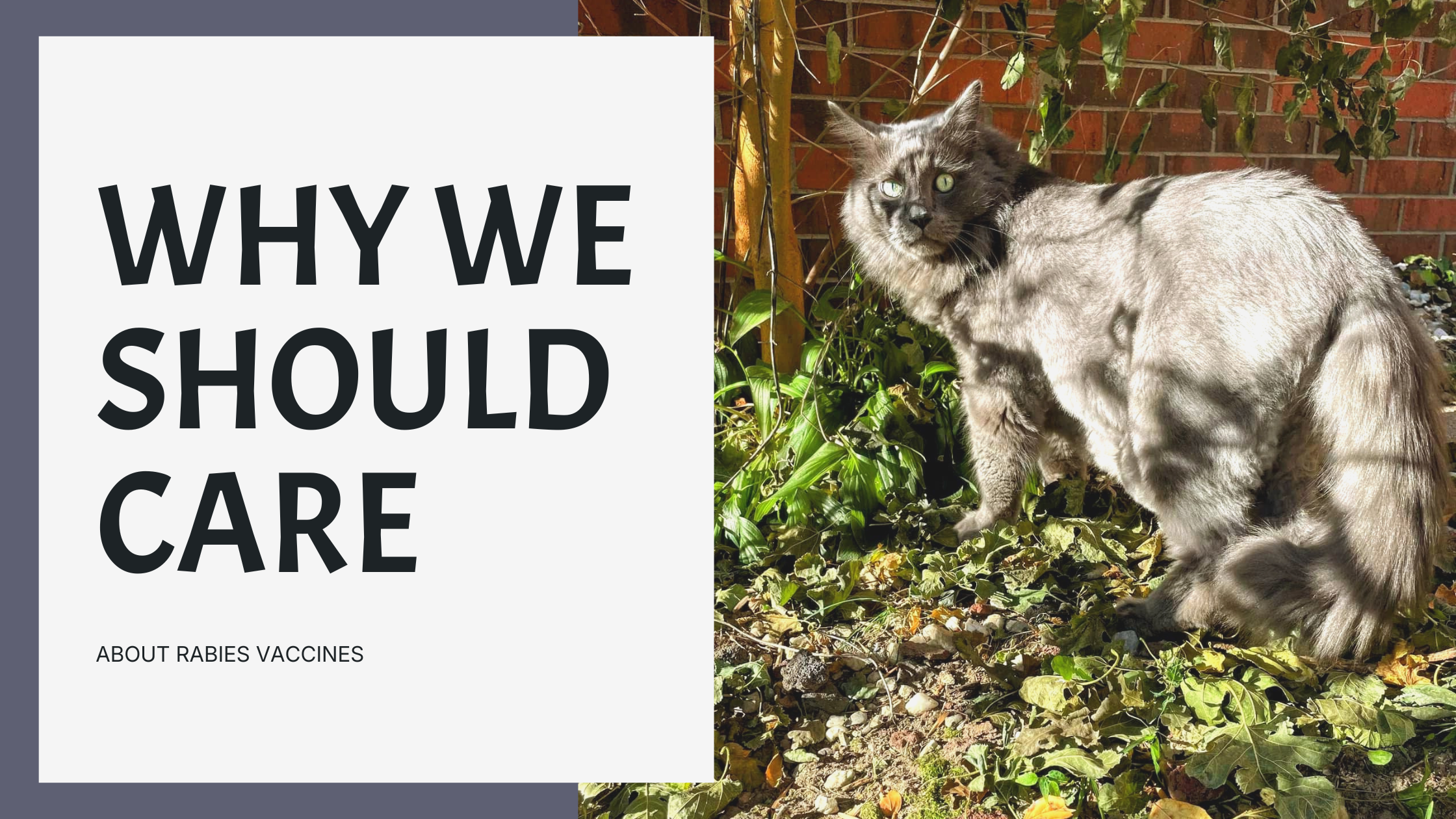
Did you hear about the rabies case in Chicago this past month? A puppy, that was properly vaccinated ended up having rabies went to a doggy daycare indirectly exposing 90 pet owners along with their dogs and directly exposing 13 people through their dogs.
The puppy, even though being vaccinated at an age appropriate time could have been exposed to the virus during the window of opportunity after the vaccination (within the first 7 days) before they could build up their immunity or the entire litter of puppies from where the puppy came from could have been infected already prior. The incubation of rabies in animals is typically 20-60 days but can take up to a year in rare instances. Still unknown on how the puppy was infected though!
Diagnosis:
Rabies can only be diagnosed through decapitation of the animal or human through a brain biopsy.
Animal symptoms: Unusual aggression or irritability, Excessive drooling or difficulty swallowing, Sensitivity to light or sound, Disorientation or lack of coordination, Paralysis or weakness, Sudden behavior changes.
Human symptoms: Once a human shows symptoms of the disease it is almost always fatal. The symptoms can include numbness or tingling where you were bitten/scratched, hallucinations, feeling anxious/energetic, difficulty swallowing/breathing and being unable to move (paralysis).
How is it spread:
Rabies can be spread through bites and also via saliva entering the eyes, nose or mouth through direct contact. If a person has open cuts or sores on their body saliva entering in through there can spread the disease as well.
How it relates to us:
In 2023, Cats took the top spot for rabies cases per the American Veterinary Medical Association with 222 reported positive cases (Cornell CatWatch, Nov 2025). Cattle in second and dogs in third. Rabies was most commonly picked up by skunks, raccoons and foxes. Although indoor cats may have a lesser risk, bats can still get inside your home or apartment as they only need a half inch to squeeze through to get inside a warm house and indoor cats can go missing at any time.
In addition to cats taking the lead in 2025, Douglas county has had 12 cases of rabies from bats reported. This statistic only includes bats that were tested, as bats need to be decapitated as well in order to test for the disease. Bats that were let go based on specific lower exposure criteria outlined by the Nebraska Humane Society would not have been tested.
Rabies is almost Always FATAL
〰️
Rabies is almost Always FATAL 〰️
The Takeaway
Even though vaccines aren't a 100% guarantee they still out beat by far the potential consequences of what could happen of not getting them. Physiology is different for every animal where medicine cannot 100% work the same way in every animal and human each and every time as bacteria and viruses evolve and grow just as fast as we do. This is why medicine is always evolving and changing for the better.
However, despite the constant change, cats and dogs should have their annual or tri-annual rabies vaccinations regularly. In the event they are exposed to a rabies outbreak the protocol is to revaccinate them with a booster shot and quarantine them for 45 days or as directed by the veterinarian at the given time. This is important as it protects not only them from a terrible death, but you, your other pets, your friends, their pets, their friends pets, your neighbors pets, your doggy daycare attendees, YOUR PET SITTER, your family and so many more!
Core vaccines for dogs: Rabies, Distemper, Adenovirus (Hepatitis), and Parvovirus (often combined as DHPP); for cats, they're Rabies, Panleukopenia (Feline Distemper), Calicivirus, and Herpesvirus (Rhinotracheitis)